Springs
Springs are essential mechanical components widely utilized across automotive, aerospace, medical device, electronics, and consumer product industries. From miniature keyboard springs to heavy‑duty automotive suspension components, springs are present in nearly all modern mechanical systems. They support core mechanical functions including tension, compression, and torsion movement, with load capacities ranging from fractional pound micro‑forces to hundreds of thousands of pounds for industrial heavy‑load applications.
Due to their extensive application range and critical mechanical responsibilities, consistent and accurate spring performance testing is essential to ensure product safety, stability, and service life. Precise mechanical testing helps manufacturers verify spring stiffness, elastic performance, fatigue resistance, and load tolerance under real working conditions.
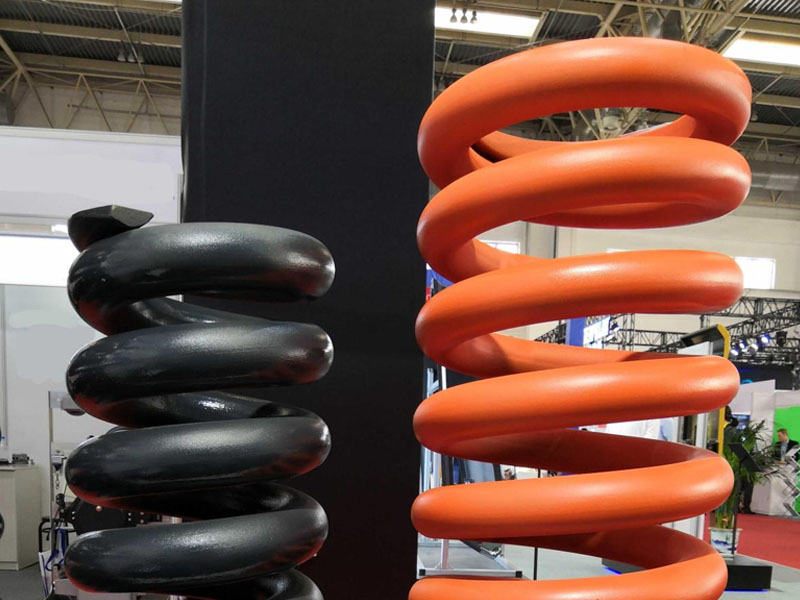
HUASINTEST spring testing machines provide professional, high‑precision testing solutions for all mainstream spring types. Our equipment reliably evaluates the complete mechanical properties of tension springs, compression springs, and torsion springs, delivering accurate and repeatable test data for quality control, product research and development, and industrial compliance verification.
The Importance of Professional Spring Testing
Springs directly influence the operational stability, safety, and durability of mechanical equipment. Unverified or substandard springs may suffer from elastic fatigue, permanent deformation, force attenuation, and structural failure after long‑term repeated movement. In high‑precision industries such as medical devices, aerospace components, and automotive safety parts, unqualified springs can lead to equipment malfunction and potential safety hazards.
Professional spring testing effectively eliminates unqualified products, standardizes mechanical performance indicators, and optimizes spring material selection and structural design. It is a necessary procedure for industrial mass production and high‑standard quality assurance.
Main Types of Springs and Corresponding Testing Requirements
1. Tension Springs
Tension springs are designed for stretching and resetting motion, commonly used in electronics, household appliances, and precision machinery. Testing focuses on tensile strength, elongation performance, elastic recovery, and repeated tension fatigue resistance to ensure stable force output during continuous stretching cycles.
2. Compression Springs
Compression springs are widely applied in shock absorption, support, and pressure‑bearing structures for automobiles, industrial machinery, and building equipment. Key testing indicators include compression stiffness, maximum compression load, deformation recovery, and long‑term compression fatigue performance.
3. Torsion Springs
Torsion springs undertake rotational reset and torque transmission tasks, extensively used in precision instruments, automotive parts, and daily hardware. Testing verifies torsional strength, torsional angle stability, torque consistency, and anti‑fatigue performance under repeated rotation.
HUASINTEST Precision Spring Testing Machine Advantages
Our spring testing equipment covers an ultra‑wide force testing range, adapting from micro‑precision small springs for consumer electronics to super‑large heavy‑load industrial springs for engineering machinery. Adopting high‑sensitivity precision sensors and intelligent data acquisition systems, our testing machines ensure highly accurate, stable, and reproducible test results.
Suitable for research institutions, manufacturing factories, and quality control departments, HUASINTEST professional spring testing solutions fully meet industrial testing standards, helping enterprises improve product quality, optimize structural design, and achieve standardized spring production inspection.