Drop‑Tower Systems: Optimizing Tensile Impact Strength Testing
Material research and development consistently faces a critical bottleneck: performance discrepancies between CAE simulation models and real‑world experimental results. Even highly sophisticated computer‑aided engineering models fail to accurately predict material field performance without precise, high‑quality dynamic test data. Traditional static mechanical test data cannot fully replicate material responses under sudden impact, shock, and high‑speed loading conditions.
Drop tower‑based dynamic tensile impact testing effectively bridges the gap between simulated material performance and actual service behavior. This advanced testing methodology enables material scientists and mechanical engineers to acquire reliable high‑strain‑rate data, ensuring simulation results align closely with real‑world operating scenarios.
The Limitations of Conventional Static Material Characterization
Early‑stage material qualification primarily relies on quasi‑static and static tensile tests to measure fundamental mechanical properties, including density, structural stiffness, and static tensile strength. These standardized tests apply load gradually over seconds or minutes, delivering stable baseline data for routine material evaluation.
However, static testing cannot reflect material behavior under instantaneous, high‑speed dynamic loading. Most polymers, plastic films, composite materials, and adhesive products exhibit completely different mechanical responses at high strain rates. Relying solely on static test data and manual data extrapolation will lead to inaccurate performance predictions and potential product safety risks.
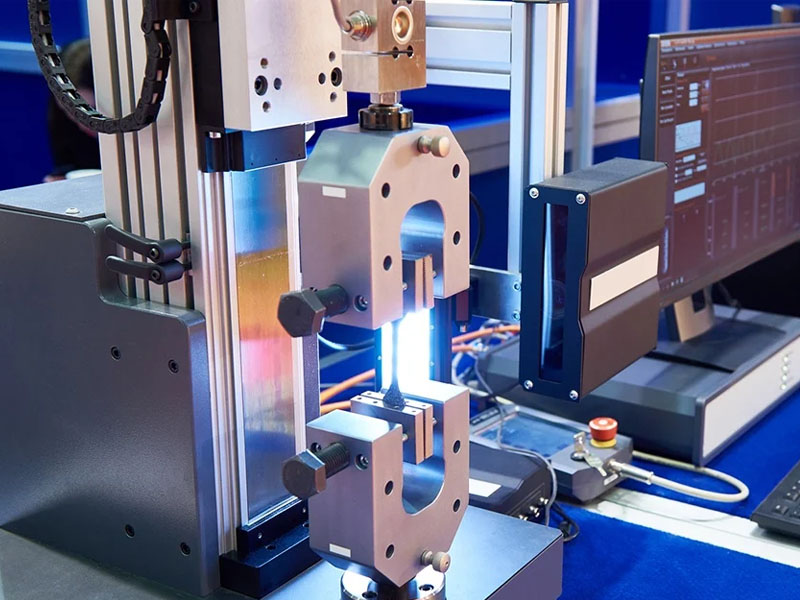
Static vs Dynamic Tensile Testing: Core Differences
Quasi‑static testing remains indispensable for evaluating long‑term, steady‑load material performance. Nevertheless, it shows obvious defects in impact and impulse loading scenarios:
- Dynamic deformation and structural failure complete within milliseconds, far beyond the capture range of conventional static test equipment
- Material toughness, ductility, and fracture mechanisms are highly strain‑rate dependent
- Static data extrapolation for dynamic impact analysis produces large deviations, especially for flexible and layered composite materials
Why High‑Strain‑Rate Dynamic Test Data Is Indispensable for Industrial R&D
Multiple high‑end industries require strict dynamic loading reliability for core components, where static test data is no longer sufficient for compliance verification and performance validation.
- Automotive & Aerospace Industry: Safety‑critical structural components require predictable mechanical performance during crash impacts and high‑speed collision events
- Electric Vehicle Industry: Battery separator films and thermal structural materials must maintain structural integrity under sudden mechanical shocks and transient thermal loads
- Electronics Manufacturing: Thin films, structural adhesives, and precision components need to withstand drop shocks and high‑speed assembly process loads
Industry standards including UL 2580 explicitly mandate dynamic condition characterization for battery system components, prohibiting simple inference from static test results. Additionally, mainstream OEM internal technical specifications require comprehensive dynamic tensile impact testing, which exceeds the scope of conventional industry standards.
Key Challenges of Traditional Dynamic Impact Testing
Although dynamic testing is critical for advanced material development, conventional dynamic test methods have long been limited by technical and equipment constraints:
- Ultra‑high‑speed failure: Material fracture completes in milliseconds, making it impossible for traditional sensors to capture complete failure data
- Low data fidelity: Insufficient sampling rates lead to missing force peak values and ambiguous failure mechanism analysis
- High equipment cost and complex integration: Traditional dynamic test systems require complex calibration and operation processes
Common dynamic testing solutions include Split Hopkinson Pressure Bar (SHPB) for ultra‑high strain rate testing and pendulum impact testers for Charpy and Izod fracture evaluation. However, these devices lack flexible parameter adjustment capabilities and professional tensile impact testing configurations, failing to cover full‑type material tensile dynamic characterization requirements.
Working Principle of Drop Tower Tensile Impact Testing
Drop tower tensile impact testers apply precise, controllable high‑velocity tensile load to test specimens via a guided falling striker, achieving standardized and repeatable high‑strain‑rate tensile impact testing. The standardized test workflow is as follows:
- Fix and clamp the test specimen vertically using a dedicated tensile impact vise to ensure stable test positioning
- Release the striker from a precise preset height to generate standardized impact velocity and tensile load
- Equipped with strain gauge or piezoelectric sensors on the instrumented tup to capture real‑time impact force data
- Automatically calculate total energy absorption, deformation displacement and failure characteristics until specimen fracture
This advanced testing method directly obtains core dynamic performance indicators, including tensile impact strength, impact energy absorption, high‑speed deformation behavior, and dynamic failure modes. It fundamentally eliminates data errors caused by static test extrapolation.
Core Advantages of Modern Drop Tower Test Systems
1. High‑Speed Imaging Synchronization Analysis
Integrated high‑speed cameras record the entire material failure process frame by frame, capturing millisecond‑level dynamic changes. Synchronized with real‑time force data, the system accurately identifies crack initiation timing, elastic‑plastic deformation transition, and full fracture propagation procedures.
2. Full‑Field Strain Analysis via DIC Technology
Built‑in Digital Image Correlation (DIC) technology upgrades traditional average strain calculation to full‑field strain mapping. It precisely locates local stress concentration areas and effectively characterizes the dynamic performance of anisotropic materials, layered films, and composite structures, providing microscopic data support for material optimization.
3. High‑Resolution Dynamic Data Acquisition
Modern drop tower systems support wide‑range adjustable sampling frequencies, adapting to diverse material failure characteristics. Brittle materials with ultra‑fast fracture (within 10ms) and ductile materials with long‑term deformation (tens of milliseconds) can both obtain accurate force‑time curves and energy‑time curves, ensuring full‑scene data authenticity.
Accelerate Material R&D by Abandoning Static Data Extrapolation
Static and quasi‑static testing is the foundation of basic material performance evaluation, but it cannot fully simulate complex real‑world working conditions. Drop tower tensile impact testing provides direct, reliable high‑strain‑rate experimental data, comprehensively optimizing CAE simulation accuracy, material selection rationality, and final product safety and reliability.
For strain‑rate‑sensitive materials such as polymers, engineering plastics, functional films, and multi‑layer composites, drop tower test systems have become core standard equipment for modern material characterization and R&D verification.
Instron 9400 Series Drop Tower Systems: Professional Dynamic Testing Solutions
The Instron 9400 Series drop tower systems, including the high‑performance 9450 High Energy Drop Tower, deliver high‑precision, repeatable tensile impact test data for multiple materials and industrial application scenarios. The system perfectly meets industry standard specifications and OEM customized dynamic testing requirements.
If you need to optimize your material development and dynamic characterization workflow, contact Instron application specialists or apply for equipment demos to explore the full value of drop tower tensile impact testing.