Textiles
When it comes to textile quality control, selecting appropriate textile testing solutions is critical to verifying product performance and meeting industry compliance standards. Leveraging our profound industry expertise and comprehensive portfolio of textile testing machines, we deliver tailored testing solutions for diverse textile material evaluation requirements.
We supply a full spectrum of textile test equipment, serving as your reliable one‑stop partner for complete textile testing workflows. Our product lineup covers universal tensile testers, puncture resistance testers and more, to match your distinct laboratory and production‑line testing demands.
Our in‑house team of textile testing specialists works closely with customers to identify optimal testing setups fully aligned with your unique specifications and application scenarios.
What Are Textiles?
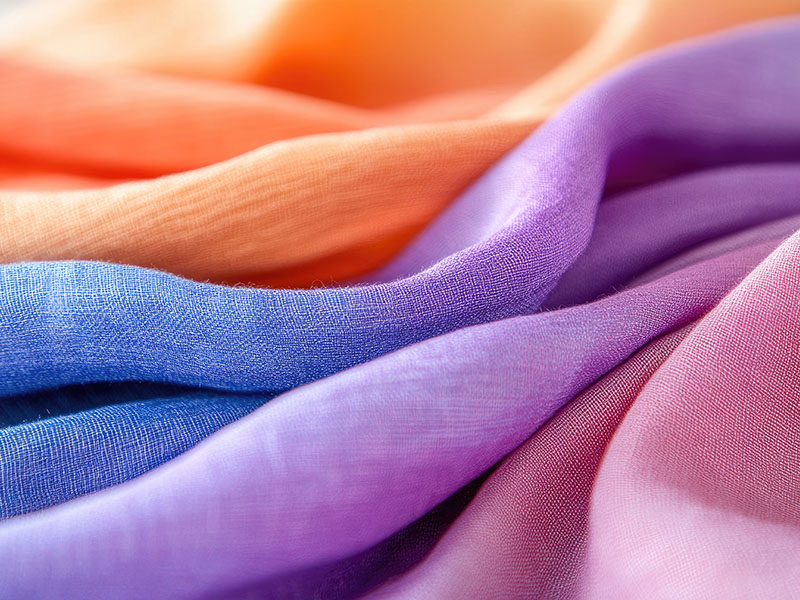
Textiles are flexible materials constructed from fibers, filaments or strands, deployed across countless end‑uses from household carpets to high‑performance space suits. Fibers can be natural or synthetic, and are consolidated via different manufacturing techniques to produce woven or non‑woven textile structures.
- Woven Textiles: Formed by interlacing fiber yarns in structured patterns, where individual yarns mutually support and reinforce one another.
- Non‑woven Textiles: Fibers bonded by chemical, mechanical or thermal treatments. The overall material strength relies heavily on the bonding process rather than yarn interweaving.
- Coated Fabrics: A special textile category subject to testing per ASTM D751 standard specifications.
Why Perform Textile Mechanical Testing?
Mechanical property testing for textiles evaluates material performance under real‑world service conditions, helping engineers validate material fitness‑for‑purpose or identify the need for alternative materials. Test outcomes are influenced by fiber raw material characteristics, fiber physical geometry, and textile bonding or weaving construction.
Common Textile Mechanical Test Methods
Tensile Strength Test
Measures the maximum stress a fabric can sustain before fracture under uniaxial stretching load.
Raveled‑Strip Test & Cut‑Strip Test
The raveled‑strip method assesses breaking force and elongation‑at‑break for woven fabrics. Cut‑strip specimens are widely adopted for non‑woven materials and coated fabrics.
Grab Test
A standardized textile test procedure designed to characterize bulk fabric properties. Only the central portion of the specimen is clamped, excluding edge zones to eliminate edge‑effect‑caused measurement deviations. Our custom test grips are fitted with grab jaw inserts manufactured strictly in compliance with global test standards.
Tear Resistance Tests
Two mainstream tear test methodologies are widely implemented:
- Tongue Tear Test: Quantifies the force needed to propagate an existing cut‑initiated tear across fabric specimens.
- Trapezoid Tear Test: Determines fabric tear resistance using specially prepared trapezoidal test samples.
Puncture Resistance Test
Records the force exerted when a standardized probe penetrates fabric, representing material penetration‑resistant performance.
Burst Strength Test
Utilizes dedicated fixtures to apply uniform pressure over a defined sample area and measures the rupture force of textile fabrics.
Seam Strength Test
Verifies mechanical robustness of stitched seams to confirm service reliability of sewn textile products.
Cantilever Bend Test
Evaluates fabric stiffness and bending resistance. A fabric strip bends under its own weight, and deflection angle is captured for stiffness calculation.
Fastener Strength Test
Validates attachment security of textile accessories including buttons, zippers and snap fasteners.
Coating Adhesion Test (for Coated Fabrics)
Measures interfacial bond strength between surface coating and base substrate. A peeling load is applied to conditioned samples to record the separation force between coating and base fabric.
How Textile Testing Is Executed
Textile mechanical tests can be performed on finished fabric specimens or on single constituent fibers. For single‑fiber testing, tensile load is applied to obtain breaking strength and elongation‑at‑break metrics, which support material qualification for target applications.
Test method selection depends on target performance indicators and material types. Corresponding grips and auxiliary fixtures are essential: grab test fixtures or strip test fixtures are the most frequently used options.
For grab tests, specimen ends are firmly held by compressive clamping force. For strip tests, sample ends are tightly wound around bars to form self‑locking loops that prevent specimen slippage during loading.
Whatever your textile testing challenges may be, we provide complete, standards‑compliant machine and fixture solutions to satisfy your full‑range testing requirements.