Industrial-Grade Test Methods for Concrete Compressive Strength with Precision Testing Machinery
Accurate determination of concrete compressive strength is a fundamental prerequisite for structural safety verification and engineering quality control. This technical guideline systematically elaborates the full-scale testing procedure for concrete compressive strength, covering specimen pretreatment, standard curing protocols, and mainstream field and laboratory testing methodologies, including rebound hammer testing and penetration resistance testing. The standardized operation procedures specified in this guide ensure the acquisition of high-precision, repeatable, and reliable test data for engineering application.
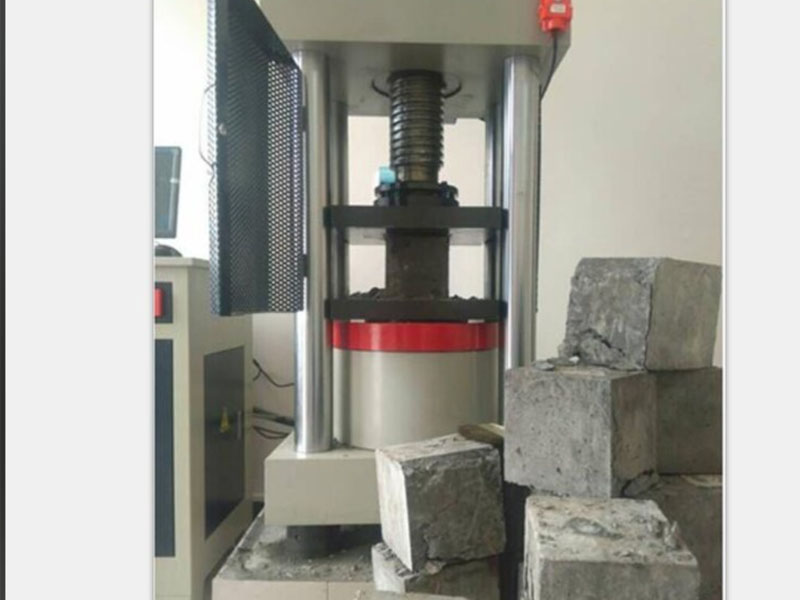
1. Overview of Concrete Compressive Strength
Concrete compressive strength refers to the maximum axial compressive load that concrete can withstand without structural cracking or irreversible deflection, serving as a core mechanical performance index of concrete materials. This parameter quantitatively characterizes the load-bearing capacity of concrete components and acts as a critical evaluation basis for the structural stability and service reliability of building and civil engineering infrastructures.
Multiple intrinsic and extrinsic factors govern the compressive strength of concrete. Raw material performance, including cement grade, fineness, and aggregate quality, imposes a decisive impact on the final strength grade. In addition, concrete strength exhibits a positive correlation with curing age, which constitutes an essential variable for strength calibration and structural performance evaluation. Comprehensive consideration of influencing factors is mandatory to eliminate test errors and ensure data validity.
With the iterative upgrading of industrial sensor technology, real-time dynamic monitoring of concrete strength development has been realized. This intelligent testing mode supports continuous full-cycle strength tracking, provides visualized data support for construction process optimization, and effectively improves engineering construction safety and operational efficiency.
2. Standard Preparation of Cylindrical Concrete Test Specimens
Standardized specimen preparation and curing are the primary guarantees for credible compressive strength test results. Test specimens shall be fabricated with on-site concrete mixtures consistent with the actual project to ensure test representativeness, with the applicable concrete strength grade stipulated as M15 and above.
For strength detection of hardened concrete in existing structures, core drilling sampling shall be performed in accordance with ASTM C42 standard specifications to obtain structural concrete core specimens for subsequent mechanical testing.
Cylindrical test molds shall be manufactured with non-absorbent, rigid materials to ensure structural integrity and zero slurry leakage during specimen molding. Cement paste shall be adopted for surface finishing to achieve a flat and uniform specimen top surface. The initial curing stage shall be maintained at a constant temperature of 60–80 ℉ within 48 hours after molding. Prior to formal testing, specimens shall be placed in calcium hydroxide saturated water for standard saturated curing to stabilize material hydration properties.
Specimen transportation shall be completed within 4 hours post-curing to prevent surface damage, moisture loss, or internal structural variation, which may cause data deviation. Standardized specimen preparation, curing, and transportation procedures form the foundation of concrete quality control in construction engineering.
3. Standard Compressive Testing Procedure for Concrete
Concrete compressive strength testing is implemented via professional compression testing machines. The equipment applies graded axial compressive load to standard specimens until structural failure, so as to measure the ultimate compressive bearing capacity of concrete materials. Laboratory compressive tests are mainly conducted on standard cylindrical specimens in compliance with industry unified specifications. For in-situ hardened concrete structures, non-destructive and semi-destructive testing methods such as penetration resistance testing and cast-in-place cylinder testing are adopted to evaluate the actual strength of completed structural concrete.
Cylinder compressive failure tests are arranged at specified curing intervals, typically 7-day and 28-day curing ages, to analyze the strength growth law of concrete. Among them, the 28-day compressive strength is recognized as the authoritative benchmark for concrete quality acceptance. During testing, the loading rate is strictly controlled at 140 kg/cm² per minute until specimen failure. The final compressive strength value is determined by calculating the average test data of no less than two standard-cured specimens to ensure test accuracy.
It is noteworthy that partial detection methods including pullout testing and drilled core testing belong to destructive testing technologies, which will cause local structural damage to concrete components and may affect the overall structural integrity of buildings. Standard compressive test data provides quantitative technical support for the quality appraisal and safety assessment of concrete engineering projects.
4. Mainstream Concrete Strength Testing Methods
A variety of standardized testing technologies are available for concrete strength detection, with distinct applicability and technical advantages for different engineering scenarios. The field-cured cylindrical specimen testing method is the most widely adopted conventional technology. Specimens are fabricated and cured in strict accordance with ASTM C31 standards, and multi-stage mechanical testing is completed by third-party qualified laboratories.
In practical engineering applications, project supervisors shall select targeted testing schemes by comprehensively evaluating key indicators including construction schedule adaptability, test precision, and concrete quality requirements. Common mainstream testing technologies cover rebound hammer testing, penetration resistance testing, and pullout testing. Each method can independently reflect the mechanical performance characteristics of concrete, enabling differentiated selection based on project test demands and field conditions to realize precise quality control.
4.1 Rebound Hammer Testing
Rebound hammer testing is a typical portable non-destructive testing technology. It calculates the surface hardness and extrapolates the compressive strength of concrete by measuring the rebound distance of a spring-driven impact hammer after striking the concrete surface. Featuring simple operation and high field adaptability, this method is highly suitable for rapid on-site screening detection.
Nevertheless, test accuracy is susceptible to interference factors such as concrete surface roughness, internal moisture content, and concrete material type. Despite inherent technical limitations, it remains an efficient auxiliary testing means for rapid strength evaluation in engineering field detection.
4.2 Penetration Resistance Testing
Penetration resistance testing evaluates concrete compressive strength by detecting the ultimate driving force required for a standardized probe to penetrate the concrete surface layer. Pre-test equipment calibration is a mandatory procedure to eliminate instrument system errors and ensure the authenticity and accuracy of test data.
This testing method can effectively obtain the overall strength parameters and structural integrity indicators of concrete components, providing reliable data support for in-situ concrete performance evaluation.
4.3 Pullout Testing
Pullout testing is a semi-destructive in-situ testing technology for concrete strength. It measures the ultimate tensile force required to pull out pre-embedded anchors fixed inside concrete, so as to inversely deduce the actual compressive strength of structural concrete. The standard operation process includes concrete drilling, anchor embedding, and graded tensile loading until anchor dislodgement.
Test data obtained from pullout testing serves as a critical evaluation basis for the load-bearing capacity and structural safety of concrete components, ensuring that engineering quality complies with national and industry construction specification standards.
5. Key Influencing Factors of Compressive Strength Test Results
The accuracy and stability of concrete compressive strength test results are affected by multiple material and environmental factors. The quality of raw materials including cement, fine aggregate, and coarse aggregate is the fundamental guarantee of concrete mechanical properties. The water-cement ratio is a core proportioning parameter restricting strength development, with the optimal mixing ratio recommended as 1:2:3:0.5 (cement:sand:aggregate:water).
Curing temperature and humidity are key environmental factors determining concrete hydration efficiency and strength growth. The standard curing temperature range is 12–22 ℃, and the relative humidity shall be stably maintained at 85%–90% to ensure sufficient and complete hydration reaction of cement. In addition, concrete compaction quality during the setting stage significantly affects final strength; insufficient compaction will generate internal voids, resulting in a maximum strength reduction of 40%.
The combined application of multiple testing methods can realize multi-dimensional verification of concrete strength data, effectively eliminate test deviations caused by material differences and environmental fluctuations, and greatly improve the stability and credibility of strength detection results.
6. Analysis and Engineering Application of Compressive Strength Test Data
Compressive strength test data can scientifically verify the axial load-bearing capacity and structural deformation resistance of concrete components, directly reflecting the mechanical stability and long-term durability of concrete materials, and serving as the core basis for structural safety assessment.
Multi-method combined testing can form a comprehensive and systematic data set, providing reliable technical reference for construction scheme optimization and engineering quality judgment. Concrete strength possesses continuous growth characteristics with service age, with sustainable strength improvement from the initial curing stage to long-term service period. Long-term strength monitoring data is of great significance for predicting the long-term service performance and durability of concrete structures.
7. Overview of Concrete Compression Testing Machines
Concrete compression testing machines are special customized equipment derived from universal testing machines, which are professionally used for static compressive mechanical performance testing of building materials, components, and finished products. The series of compression testing machines independently developed and configured can accurately test and measure multiple core mechanical indicators, including ultimate compressive strength, compressive yield strength, compressive deflection, and elastic modulus, meeting the standardized testing requirements of concrete mechanical performance in the testing machine industry.